
Group Members
|
|
Group Leader
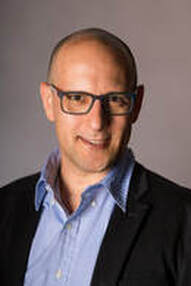
|
|

Staff
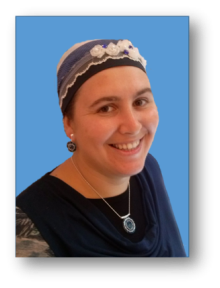
Avia Lavon
Engineer and Lab Manager |
Avia is a biomedical processes lab engineer in the Department of Biomedical Engineering at BGU and Lab Manager at the Nanobioelectronics Laboratory. Avia specializes in cell biology and biochemistry research. She received her B.Sc. (2008) in Nuclear Engineering, M.Med.Sc. in Medical Sciences (2011) and M.Sc. in Management and Safety engineering (2015), all in Ben-Gurion University of the Negev. During her M.Med.Sc. Avia’s research focused on Searching for Potential Osteoporosis Biomarkers and Investigation of Apoptosis Mechanisms in osteoporosis using osteoporosis models in rats, cell biology, and biochemical and histology methods.
|

Dalit is on the designation of Research administrative supporter at the Ben-Gurion University of the Negev, Israel. She has completed her master degree in business administration from Heriot-watt University and her bachelor degree is in Human Resources from Sapir College, Israel. She is working with NBEL members to make the research administrative work easier for the graduate and post-graduate students.
Dalit galitsky
Research Administrative Supporter
Office: Building 42, room 329
Email: [email protected]
Research Administrative Supporter
Office: Building 42, room 329
Email: [email protected]
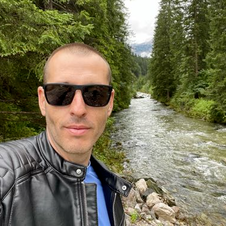
Alexander is one of the staff at Ben Gurion University of the Negev, he studies lithography to help students, also designs sketches for solidworks. He has completed his Bachelor of Science ( B.Sc 2007-2011) in Chemical engineering from Sami Shamoon College. His focus is on the fabrication of various micro and macro scale level electrodes.
Staff Scientist
Gideon completed his BSc (2005), MSc (2007) and PhD (2015) at the Hebrew University of Jerusalem. His MSc thesis title is: Noether Conservation Laws and Conformal Infinity, under the guidance of (the late) Prof. Joseph Katz. For his PhD, Gideon studied the electrical properties of guanine-based DNA derivatives in the group of Prof. Danny Porath. The dissertation is: Development of novel electrical characterization methods and measurements of G4-DNA and DNA Derivatives. Gideon then proceeded to do biophysics research into the stability of telomeres at NCSU in the groups of Profs. Robert Riehn and Hong Wang. Later, Gideon worked as a JSPS scholar at Osaka University, studying fountain pen lithography in the lab of Prof. Takuya Matsumoto. Since 2020, Gideon has been teaching Maths and Physics at HIT and Sami Shamoon College. Since March 2024, Gideon is a research associate at the lab, with a focus on electrochemical sensors and AFM-SECM.
Gideon Isaac Livshits
Staff Scientist
Office: Building 64, Room 208
Staff Scientist
Office: Building 64, Room 208
Doctoral Students
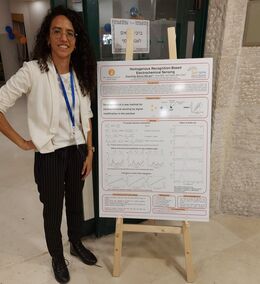
Oriya Ester Maruani is a Ph.D. student in the Chemistry department at Ben-Gurion University of the Negev and is co-supervised with Dr. Anat Milo. Oriya completed her Master of Science ( M.Sc.2018-2020) in Chemistry department under the same co-supervision in the subject electrochemical detection methods. Oriya received her Bachelor of Science ( B.Sc. 2014-2018) in Chemical Engineering from Ben-Gurion University of the Negev. Her present research work focuses on a Lab-on-a-chip system composed of 3D microelectrodes for the electrochemical analysis of bacteria producing biofilm.
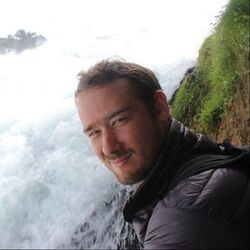
Daniel Kaufman is a Ph.D. student in the Department of Biomedical Engineering at Ben-Gurion University of the Negev. Daniel completed his master and undergrad studies in the same department. His research focuses on influencing biological behavior of single cells using electrical signal.
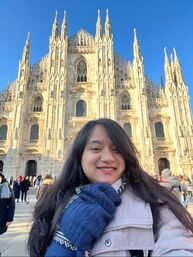
- Meghna Khadka is a Ph.D. student in the Department of Biomedical Engineering at Ben-Gurion University of the Negev. She has completed her Master of Science (M.Sc. 2017-2019) in Chemistry from Sikkim Manipal University, India and Bachelor of Science (B.Sc. Hons. 2014-2017) in Chemistry from Calcutta University, India. She worked on the synthesis, characterization and application of zinc oxide decorated graphene oxide in her master studies. Meghna's PhD project focuses on development of electrochemical sensors for environmental pollutants.
Masters Students
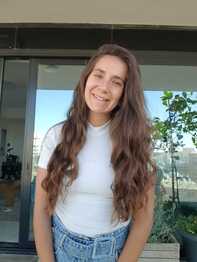
Avigayil Zerem Sztokman is a Master's student in the Department of Biomedical Engineering at Ben-Gurion University of the Negev. Avigayil received her Bachelor of Science in Material Engineering also from BGU (2022), and her undergrad project focused on doping of certain elements to create a thermodynamically efficient alloy. Her present research focuses on the effects of absorbed materials on the surface of implanted electrochemical biosensors.
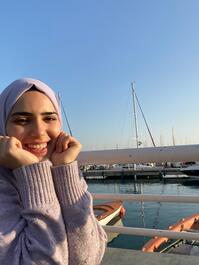
Ahed Shibli is a Master's student at the Biomedical Engineering Department at Ben-Gurion University of the Negev. Ahed completed her undergraduate studies in the same department (2022). Her research focuses on implanted electrochemical biosensors to detect cancer cells on cancer patients.
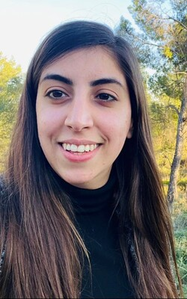
Noha Shalabny is a Master's student at the Biomedical Engineering Department at Ben-Gurion University of the Negev. Noha completed her undergraduate studies in the same department in 2023. Her research focuses on brain-machine interface aimed at real-time identification of both neurochemicals and electrophysiological signals.
Noha Shalabny is a Master's student at the Biomedical Engineering Department at Ben-Gurion University of the Negev. Noha completed her undergraduate studies in the same department in 2023. Her research focuses on brain-machine interface aimed at real-time identification of both neurochemicals and electrophysiological signals.
Graduate Students
We have open positions!
|
|
Undergraduate Students

Orel is a final-year undergraduate student in the Department of Biomedical Engineering at Ben-Gurion University of the Negev. She served as a medic in the IDF. Orel is taking part in a Rothschild leadership program and various voluntary organizations.
Orel Batito
Email: [email protected]
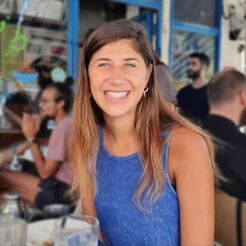
Lihi is a final-year undergraduate student in the department of biomedical engineering at Ben-Gurion University. Prior to her army service, Lihi volunteered for 1 year community service as a scouts instructor with underprivileged youth. In her army service, Lihi served as an instructor in the "Oketz" elite unit in the IDF.
Lihi Haberman
Email: [email protected]
Email: [email protected]